India: Bodal Chemicals guides FY27 revenue above ₹3,000 crore on strong H1 growth
Key facts
- Bodal Chemicals guided for FY27 consolidated revenue to exceed ₹3,000 crore, driven by strong demand in dye intermediates and improved plant utilization
- The company reported Q2FY27 consolidated net profit of ₹814 million, a significant increase from ₹60 million in the same quarter of the previous year
- Q2FY27 revenue reached ₹8.6 billion, up from ₹4.8 billion in the prior year period, while EBITDA rose to ₹1.07 billion from ₹230 million
- EBITDA margin expanded to 12.4% in Q2FY27, compared to 4.8% in the corresponding quarter of the previous fiscal year
- Management stated that future cash flows will be primarily deployed toward debt repayment, as term debt has reduced but working capital needs have increased
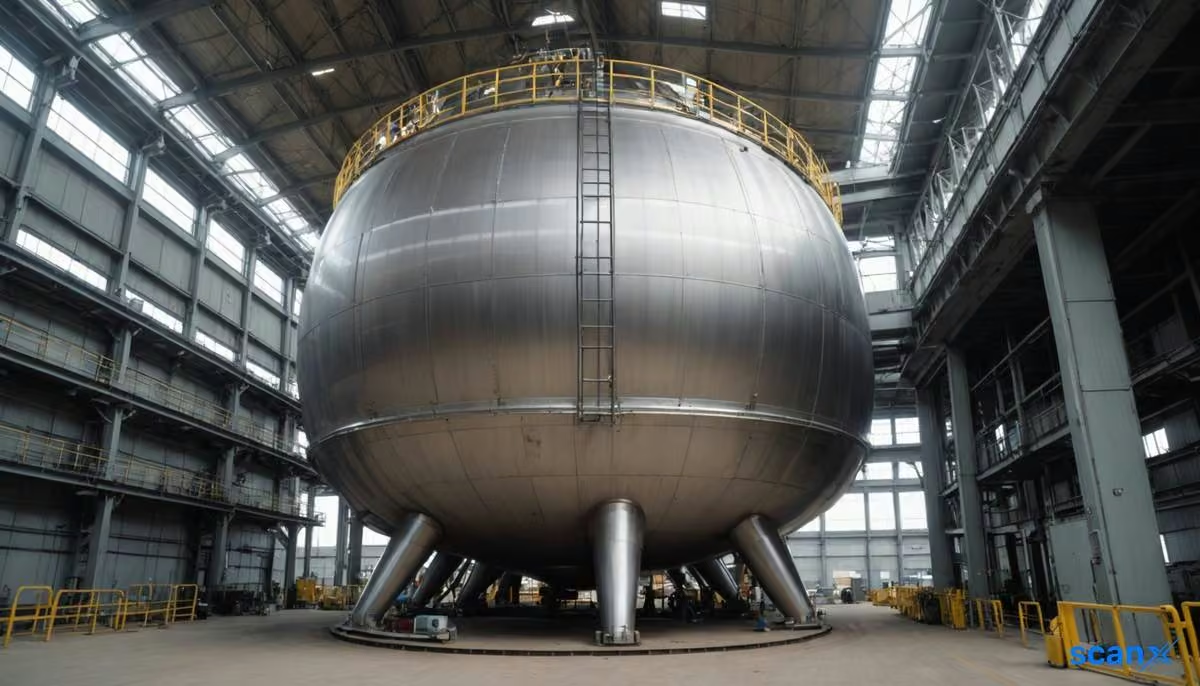
*this image is generated using AI for illustrative purposes only.
Bodal Chemicals has released the transcript of its Q2FY27 earnings conference call, where management guided for FY27 consolidated revenue to exceed ₹ 3,000 crore , driven by robust demand in dye intermediates and improved utilization at its benzene downstream plant.
The company reported a significant surge in its second-quarter financial performance, with consolidated net profit climbing to ₹ 814 million from ₹ 60 million in the corresponding period last year. The chemical manufacturer's top line expanded substantially, with revenue reaching ₹ 8.6 billion in Q2, compared to ₹ 4.8 billion in Q2 of the previous fiscal year. This robust top-line growth translated into improved operational efficiency and profitability.
Financial performance highlights
The company's earnings before interest, taxes, depreciation, and amortisation (EBITDA) rose sharply to ₹ 1.07 billion , up from ₹ 230 million in the year-ago quarter. This expansion was accompanied by a notable improvement in profitability metrics, as the EBITDA margin widened to 12.4% from 4.8% previously. For the first half of FY27, the company achieved an all-time high total revenue of ₹ 15,991 million , marking a 67% growth on a YoY basis.
Segmental performance and growth drivers
During the first half of FY27, the Dye Intermediates segment emerged as the primary growth engine, with revenue growing by 68% driven by volume and outstanding margins. In Q2FY27 specifically, Dye Intermediates revenue stood at ₹ 3,449 million, growing 88% YoY. Basic Chemicals revenue grew by 136% YoY in H1FY27, primarily due to an increase in the prices of the main raw material, Sulphur. In Q2FY27, Basic Chemicals revenue reached ₹ 990 million, a 199% YoY increase.
Dyestuffs revenue grew by 42% in H1FY27, helping absorb raw material pressures through improved realizations. The Chlor Alkali business saw moderate growth of 6% in H1FY27. The newly operational Benzene downstream products division at Saykha has begun contributing to the topline. Management noted that utilization in this segment improved to around 50% in H1 but reached approximately 85% in October, with expectations of near-full capacity utilization by the end of the current quarter.
Management outlook and strategic updates
In the earnings call, management highlighted structural changes in China's chemical industry, including stricter environmental enforcement and limited new capacity additions, which are supporting better price realizations for dye intermediates like H Acid and Vinyl Sulphone. H Acid prices have settled around ₹ 1,600-1,650 per kg levels, up from ₹ 600 in Q1 and ₹ 900 in Q2. Management stated they are not planning immediate capacity expansion for H Acid until the sustainability of these price levels is verified over the next few quarters.
Regarding capital allocation, CFO Mayur Padhya indicated that while term debt has reduced drastically, working capital needs have increased due to higher turnover. The company plans to deploy future cash flows primarily toward debt repayment. Management also disclosed one-off items contributing to other income, including ₹ 6 crore from land sale in Punjab and ₹ 8.5 crore from Gujarat government subsidies. A further subsidy of approximately ₹ 50 crore from the Punjab government is expected to be received gradually.
Balance sheet and cash flow dynamics
While profitability surged, working capital pressures emerged during the first half of FY27. Trade receivables increased significantly to ₹ 6.02 billion as of September 30, 2026, from ₹ 4.39 billion at the end of the previous fiscal year. Consequently, net cash flow generated from operating activities stood at ₹ 282.73 million for the half year ended September 30, 2026, a decline from ₹ 778.82 million in the corresponding period last year. The increase in trade receivables absorbed ₹ 1.67 billion in cash during the half-year period.
Total assets grew to ₹ 25.79 billion , supported by an increase in other equity to ₹ 12.45 billion. The company also recorded a tax benefit due to excess provision reversal of prior years amounting to ₹ 127.17 million , which contributed to the bottom-line improvement alongside operational gains.
What the numbers show
The data reveals a strong correlation between volume or price-driven revenue growth and margin expansion. While revenue grew by approximately 79%, EBITDA increased by over 365%, indicating significant operating leverage. The widening of the EBITDA margin by 760 basis points suggests that incremental revenues were generated at a much higher contribution margin than the base business, likely due to better product mix or cost efficiencies during the quarter.
However, the divergence between profit growth and operating cash flow highlights a collection pressure. Despite the 12.5x jump in net profit, operating cash flows contracted by 64% YoY for the half-year period, primarily driven by the substantial build-up in trade receivables and inventories. Management attributed this to the rapid increase in turnover, noting that receivable days have not risen significantly relative to the sales growth. The company's integrated business model, where ~40% of Basic Chemicals are captively consumed by Dye Intermediates, appears to have provided cost competitiveness against rising raw material costs.
How will the sustainability of H Acid prices at ₹1,600-1,650/kg impact Bodal Chemicals' decision to expand capacity in the next fiscal year?
What specific measures is management taking to convert the rising trade receivables into operating cash flow without hindering the rapid sales growth?
To what extent will the expected ₹50 crore Punjab government subsidy and other one-off items influence the company's reported net profit versus core operational profitability in upcoming quarters?
Chnchemicals take
The sharp improvement in margins and revenue signals a robust recovery in the dye intermediates segment, which is critical for downstream textile and pharmaceutical supply chains. This performance suggests that demand for specialized chemical inputs is stabilizing, potentially reducing supply-side volatility for buyers. However, the reliance on one-off subsidies and the need for debt repayment may limit the company's ability to invest in further capacity expansion in the near term.
Frequently asked questions
What revenue guidance did Bodal Chemicals provide for FY27 and what factors are driving this outlook?
Bodal Chemicals guided for FY27 consolidated revenue to exceed ₹3,000 crore. This outlook is driven by robust demand in dye intermediates and improved utilization at its benzene downstream plant.
How did Bodal Chemicals' Q2 FY27 financial performance compare to the same period last year in terms of profit and revenue?
Consolidated net profit climbed to ₹814 million from ₹60 million in the year-ago period. Revenue reached ₹8.6 billion in Q2, compared to ₹4.8 billion in the previous fiscal year's Q2.
What is Bodal Chemicals' strategy for capital allocation and debt management following its recent financial improvements?
The company plans to deploy future cash flows primarily toward debt repayment. Term debt has reduced drastically, but working capital needs have increased due to higher turnover.