Indonesia's sulfur imports surge sharply on both month-on-month and year-on-month bases
Key facts
- Indonesia's sulfur imports reached 704,500 metric tons in September 2026, a 155.9% increase from the previous month
- Year-on-year sulfur import growth in Indonesia stood at 64.3% for September 2026, driven by nickel smelting demand
- Malaysia supplied 475,900 metric tons of sulfur to Indonesia in September 2026, representing nearly 68% of total imports
- Canada exported 90,200 metric tons and the United Arab Emirates shipped 73,800 metric tons of sulfur to Indonesia in September 2026
Indonesia’s sulfur imports surged sharply on both a month-on-month and year-on-year basis.
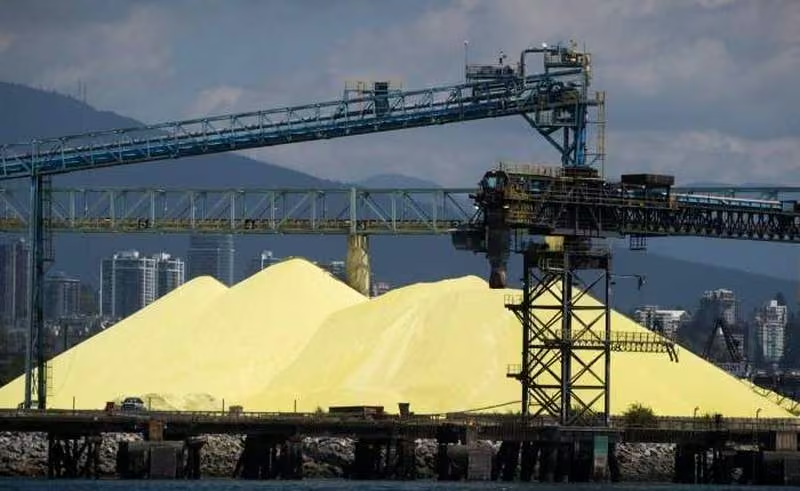
Piles of sulfur are visible at a port in British Columbia, Canada. Indonesia’s sulfur imports surged to 704,500 metric tons in September 2026, marking a 155.9% increase from the previous month and a 64.3% rise year-on-year. This sharp spike reflects the concentrated release of production capacity and the peak of raw material restocking in Indonesia’s nickel smelting sector, particularly within hydrometallurgical projects utilizing the high-pressure acid leaching (HPAL) process, following an earlier “sulfur crisis.”
According to the latest data from Shanghai Metals Market (SMM) and customs authorities, the structure and sources of Indonesia’s sulfur imports in September exhibited the following characteristics. The absolute import volume reached 704,500 metric tons. The month-on-month increase was 155.9%, while the year-on-year growth stood at 64.3%. Malaysia emerged as the largest supplier, exporting 475,900 metric tons of sulfur to Indonesia, accounting for nearly 68% of the total. Other major sources included Canada (90,200 metric tons), the United Arab Emirates (73,800 metric tons), Singapore (27,100 metric tons), as well as South Korea, Vietnam, and the Philippines.
2026 marks a peak period for the commissioning of HPAL hydrometallurgical projects in Indonesia, which produce nickel-cobalt intermediate products, known as mixed hydroxide precipitate (MHP), required for electric vehicle batteries. In September, as certain mines and smelters, such as PT Weda Bay Nickel, which had previously faced ore quota constraints, received new allocations and gradually restarted or increased their operating loads, the rigid demand for the core auxiliary material, sulfur, spiked sharply.
In the first half of 2026, escalating geopolitical tensions in the Middle East and shipping disruptions in the Strait of Hormuz severely interrupted the supply of Middle Eastern sulfur, which accounted for over 75% of Indonesia’s imports. This disruption drove global sulfur prices above 1,000 U.S. dollars per metric ton and forced major hydrometallurgical projects, including those operated by Huafeng Nickel and Cobalt, to temporarily reduce production or halt operations for maintenance due to raw material shortages. As logistics and shipping from the Middle East improved in the third quarter and sulfur prices retreated from their highs to around 880 U.S. dollars per metric ton, Indonesian smelters began large-scale buying at lower prices to replenish their depleted regular inventories.
Hydrometallurgy is a process with high acid consumption. On average, producing one metric ton of nickel in MHP form requires 8 to 11.7 metric tons of elemental sulfur. Given that Indonesia has virtually no domestic sulfur production, its massive expansion of HPAL capacity exerts a significant leverage effect on sulfur imports. Even minor increases in production or capacity expansions can trigger fluctuations of hundreds of thousands of metric tons in import trade data.
Although sulfur prices have returned to a range-bound pattern since October, driven by market expectations of excess capacity and potential production cuts in Indonesia’s overall nickel smelting sector, the import surge in September has clearly underscored the substantial influence of Indonesia’s new energy battery nickel supply chain on the global sulfur trade landscape.
Indonesia’s sulfur imports surged to 704,500 metric tons in September 2026, marking a 155.9 percent jump from the previous month and a 64.3 percent increase year-on-year. This explosive growth underscores a peak in capacity release and raw material restocking within the country’s nickel smelting sector, particularly in hydrometallurgical projects utilizing the high-pressure acid leaching (HPAL) process, following an earlier "sulfur crisis."
According to the latest data from Shanghai Metals Market (SMM) and customs authorities, the structure and sources of Indonesia’s sulfur imports in September exhibited distinct characteristics. The total import volume stood at 704,500 metric tons. Malaysia emerged as the dominant supplier, exporting 475,900 metric tons of sulfur to Indonesia, which accounted for nearly 68 percent of the total. Other significant sources included Canada with 90,200 metric tons, the United Arab Emirates with 73,800 metric tons, Singapore with 27,100 metric tons, as well as smaller volumes from South Korea, Vietnam, and the Philippines.
The year 2026 represents a peak period for the commissioning of HPAL hydrometallurgical projects in Indonesia, aimed at producing nickel-cobalt intermediate products, specifically mixed hydroxide precipitate (MHP), required for electric vehicle batteries. In September, as certain mines and smelters, such as PT Weda Bay Nickel, which had previously been constrained by ore quotas, received new allocations and gradually resumed operations while ramping up load factors, the rigid demand for the core auxiliary material, sulfur, spiked sharply.
During the first half of 2026, escalating geopolitical tensions in the Middle East and shipping disruptions through the Strait of Hormuz severely interrupted the supply of Middle Eastern sulfur, which had previously accounted for over 75 percent of Indonesia’s imports. This disruption drove global sulfur prices above 1,000 dollars per metric ton and forced major hydrometallurgical projects, including Huafeng Nickel Cobalt, to temporarily reduce production or halt operations for maintenance due to raw material shortages. As logistics and shipping from the Middle East improved in the third quarter and sulfur prices retreated from their peaks to around 880 dollars per metric ton, Indonesian smelters began aggressive buying to replenish depleted strategic inventories.
Hydrometallurgy is a process with high acid consumption. Producing one metric ton of nickel metal in MHP form requires an average of 8 to 11.7 metric tons of elemental sulfur. Given that Indonesia produces virtually no domestic sulfur, the expansion of its massive HPAL capacity exerts a high leverage effect on import volumes, where even minor resumption or expansion of production can trigger fluctuations of hundreds of thousands of metric tons in trade data.
Although sulfur prices have returned to a range-bound pattern since October, driven by market expectations of overcapacity and potential production cuts in Indonesia’s broader nickel smelting sector, the import surge in September has clearly demonstrated the substantial influence of Indonesia’s new energy battery nickel supply chain on the global sulfur trade landscape.
Chnchemicals take
The surge in Indonesian sulfur imports signals a critical bottleneck in the global nickel supply chain, as HPAL projects aggressively restock after previous shortages. This concentrated demand spike will likely tighten global sulfur availability, forcing traders to reassess logistics and contract terms. Producers must monitor these shifts closely, as the rapid capacity release in Indonesia creates immediate volatility for raw material suppliers and downstream buyers.
Frequently asked questions
What was the volume of Indonesia's sulfur imports in September 2026 and how did it change year-on-year?
Indonesia's sulfur imports reached 704,500 metric tons in September 2026. This represented a 64.3% increase compared to the same period in the previous year.
Which country was the largest supplier of sulfur to Indonesia in September 2026 and what was the volume?
Malaysia was the largest supplier, exporting 475,900 metric tons to Indonesia. This volume accounted for nearly 68% of Indonesia's total sulfur imports for that month.
What specific industrial sector in Indonesia drove the sharp increase in sulfur imports during September 2026?
The nickel smelting sector, particularly hydrometallurgical projects using high-pressure acid leaching, drove the surge. This was due to concentrated capacity release and raw material restocking following a previous crisis.