Russia: Ministry of Agriculture and FAS Extend Fertilizer Price Freeze Until May 2027
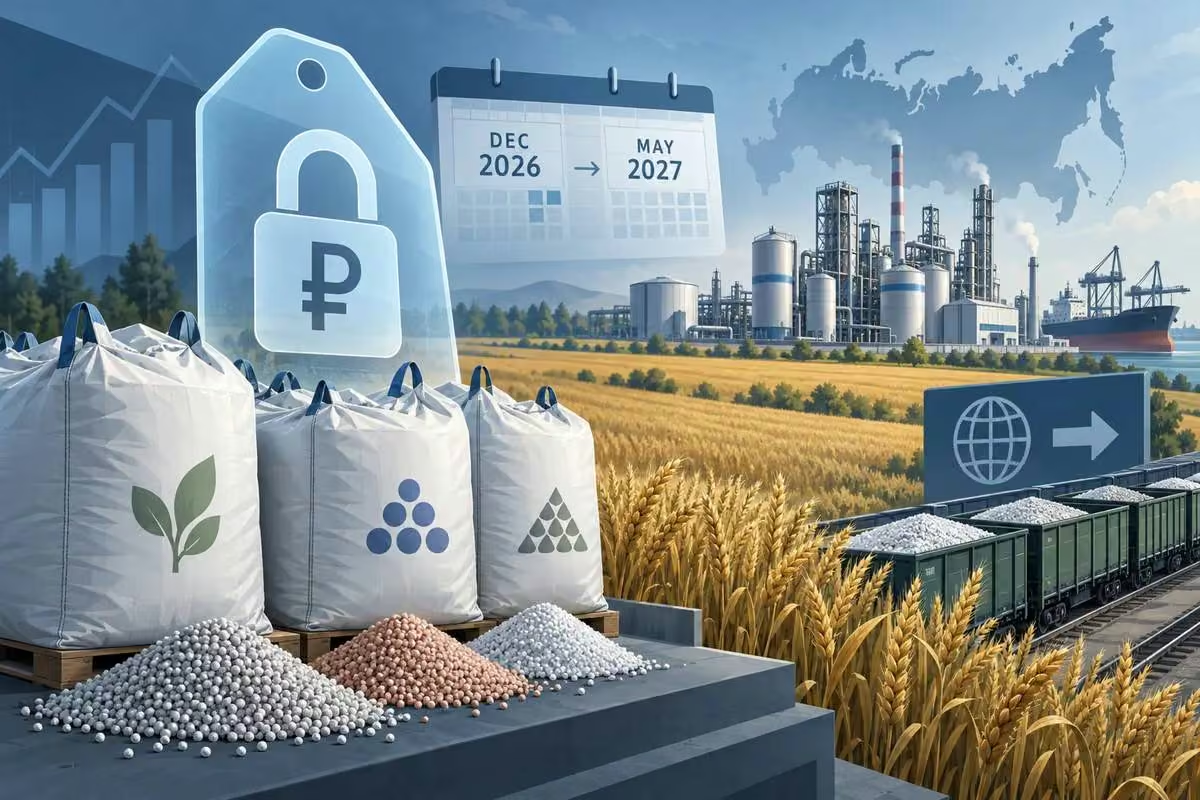
Key facts
- The Federal Antimonopoly Service extended the Russian fertilizer price freeze until May 31, 2027, continuing a policy initiated in 2021
- Export quotas for mineral fertilizers will remain in effect from December 1, 2026, to May 31, 2027, with a total volume exceeding 18.8 million tons
- The export quota includes more than 7.5 million tons of compound fertilizers, aiming to balance domestic supply needs with industry export capacity
- The price containment measure was originally introduced in July 2021 to prevent domestic fertilizer prices from spiking alongside global export rates
The Federal Antimonopoly Service (FAS) announced that the measure fixing maximum prices for mineral fertilizers on the domestic Russian market has been extended. According to the agency’s official statement, the price freeze will remain in effect from December 1, 2026, through May 31, 2027. This development represents a logical continuation of the price containment policy that was initiated in 2021.
Context and Significance
The freeze on fertilizer prices stands as a cornerstone of the state's agricultural support framework. This measure was first implemented in July 2021, a period marked by a sharp surge in global prices for mineral fertilizers. At the time, Russian farmers faced a precarious situation: domestic prices threatened to spike in tandem with export rates, which would have driven up the cost of agricultural production and, consequently, raised food prices for end consumers.
The government and the Federal Antimonopoly Service (FAS) responded swiftly by issuing recommendations to fertilizer manufacturers to cap prices for nitrogenous and complex fertilizers on the domestic market. The intervention proved effective, leading to multiple subsequent extensions of the measure.
Notably, the last price adjustment took place in September 2022, more than four years ago. Since then, prices for farmers have remained static. In an environment of persistent inflation, this stability translates to a de facto reduction in the real cost of fertilizers for agricultural producers.
Export quotas as an additional mechanism
Alongside the price freeze, the government extended fertilizer export quotas for the same period, from December 1, 2026, to May 31, 2027. The total volume of the export quota will exceed 18.8 million tons, including:
compound fertilizers — more than 7.5 million tons.
This dual measure addresses two objectives simultaneously: ensuring Russian farmers have access to affordable fertilizers in the required quantities while preserving the industry's export potential. The quotas prevent producers from diverting all production to more profitable foreign markets, thereby prioritizing the domestic supply.
What this means for farmers and the market
For agricultural producers, the extension of the price freeze serves as a signal of stability. It allows them to plan their planting campaigns without the fear of sudden spikes in fertilizer costs. This certainty is particularly valuable in an environment where other operational expenses—such as machinery, fuel, and seeds—remain subject to inflationary volatility.
The situation is more complex for fertilizer manufacturers. While they operate under fixed domestic prices, they retain access to export revenues within the framework of established quotas. Major industry players have repeatedly noted that the freeze is a forced but acceptable measure that helps maintain a balance of interests.
For consumers, the extension of this measure means that food price increases will not be driven by rising fertilizer costs, at least for the time being. Fertilizers are a key component in the production costs of grain, vegetables, and other crops.
Outcome
Extending the price freeze on fertilizers until May 31, 2027, represents a consistent step within the framework of long-term agricultural support policies. When combined with export quotas, this measure creates predictable conditions for Russian farmers while simultaneously preserving the stability of the mineral fertilizer industry. The focus now shifts to monitoring how this balance will be maintained amid shifting global market dynamics.
Chnchemicals take
This extension creates a predictable regulatory environment for Russian agricultural producers by capping input costs, which helps stabilize food production expenses. However, the simultaneous enforcement of export quotas restricts the volume of product available for international trade, potentially limiting revenue opportunities for exporters. This dual approach prioritizes domestic food security over maximizing export earnings, forcing global buyers to seek alternative supply sources.
Frequently asked questions
Until when will the Russian fertilizer price freeze remain in effect according to the FAS announcement?
The price freeze for mineral fertilizers in Russia will remain in effect until May 31, 2027. This extension continues a policy first implemented in 2021 to prevent domestic price spikes.
What is the total volume of the export quota for compound fertilizers in Russia for the upcoming period?
The total export quota for the period will exceed 18.8 million tons. This includes more than 7.5 million tons specifically allocated for compound fertilizers.
How does the extension of the price freeze impact Russian fertilizer producers and domestic farmers?
The measure ensures Russian farmers have access to affordable fertilizers while preserving the industry's export potential. It creates predictable conditions for agricultural production by capping domestic prices.